



PDE7
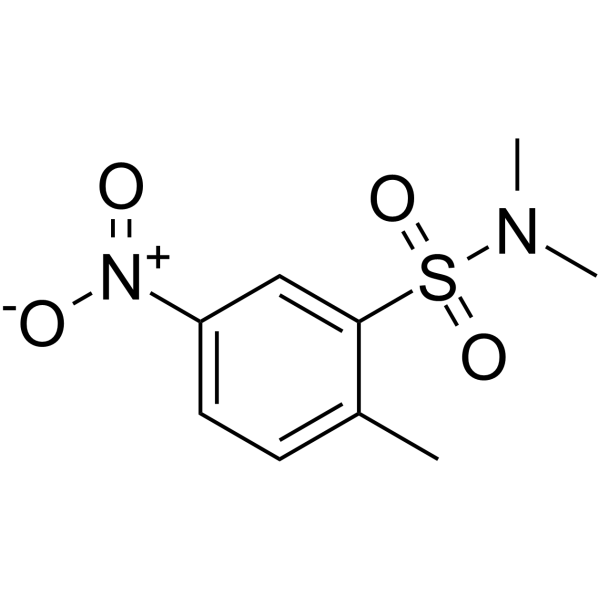
PDE7 is a cAMP-specific phosphodiesterase family that terminates biological functions of cAMP, a major intracellular regulator[1]. Mechanistically, cAMP affects cell functions through the canonical PKA pathway and non-canonical EPAC pathway, placing PDE7 within cAMP-dependent signaling control[1]. In immune biology, PDE7 is present in many immune cells, including T lymphocytes, and both PDE7A and PDE7B are expressed in T cells, where PDE7A1 is the predominant splice variant[1]. Disease-oriented studies therefore use PDE7 to examine T-cell activity, inflammation, and neurodegenerative models, including dopaminergic neuron injury[2][3]. Compared with related isoforms, PDE7 is distinguished from PDE4 by rolipram insensitivity, while PDE7A-deficient mice retain T-cell proliferation and Th1/Th2 cytokine production after CD3/CD28 costimulation[1][4]. For experimental applications, BRL 50481 competitively inhibits human recombinant PDE7A1 with a Ki of 180 nM and shows acceptable selectivity for in vitro studies in monocytes, lung macrophages, and CD8+ T lymphocytes[5]. PDE7 inhibitors also protect dopaminergic neurons against different insults, supporting their use in Parkinson disease-related experimental designs[3].
References:
- [1]. Szczypka M. Role of Phosphodiesterase 7 (PDE7) in T Cell Activity. Effects of Selective PDE7 Inhibitors and Dual PDE4/7 Inhibitors on T Cell Functions. Int J Mol Sci. 2020 Aug 25;21(17):6118. doi: 10.3390/ijms21176118. PMID: 32854348; PMCID: PMC7504236. et al. Role of Phosphodiesterase 7 (PDE7) in T Cell Activity. Effects of Selective PDE7 Inhibitors and Dual PDE4/7 Inhibitors on T Cell Functions. Int J Mol Sci. 2020 Aug 25;21(17):6118. [Content Brief]
- [2]. Zorn A, et al. Phosphodiesterase 7 as a therapeutic target - Where are we now? Cell Signal. 2023 Aug;108:110689. [Content Brief]
- [3]. Morales-Garcia JA, et al. Phosphodiesterase 7 inhibition preserves dopaminergic neurons in cellular and rodent models of Parkinson disease. PLoS One. 2011 Feb 24;6(2):e17240. [Content Brief]
- [4]. Yang G, et al. Phosphodiesterase 7A-deficient mice have functional T cells. J Immunol. 2003 Dec 15;171(12):6414-20. [Content Brief]
- [5]. Smith SJ, et al. Discovery of BRL 50481 [3-(N,N-dimethylsulfonamido)-4-methyl-nitrobenzene], a selective inhibitor of phosphodiesterase 7: in vitro studies in human monocytes, lung macrophages, and CD8+ T-lymphocytes. Mol Pharmacol. 2004 Dec;66(6):1679-89. [Content Brief]
All Product Categories
-
PDE7 관련 제품 (28)
관련 제품 (28)

- 1
- 2
-
Avanafil
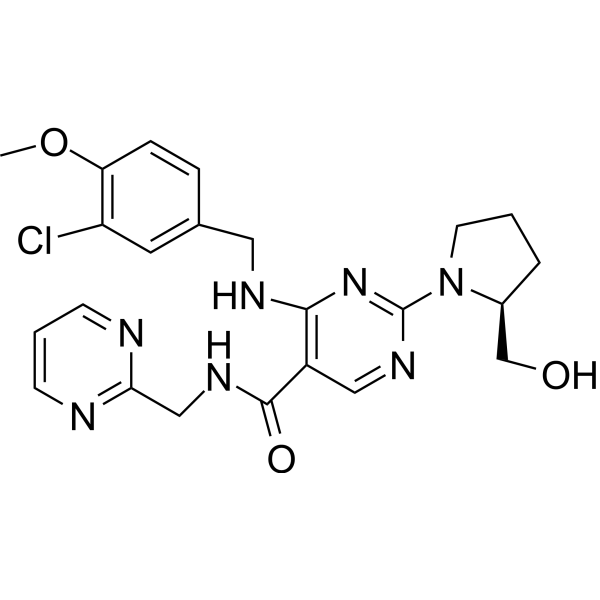 0 ImagesSynonyms: TA1790Avanafil (TA-1790) is a potent and selective phosphodiesterase-5 (PDE-5) inhibitor with IC50 values of 5.2 nM, 630 nM, 5700 nM, 6200 nM, 12000 nM, 27000 nM, 51000 nM and 53000 nM for PDE-5, PDE-6, PDE-4, PDE-10, PDE-8, PDE-7, PDE-2 and PDE-1, respectively. Avanafil activates NO/cGMP/PKG signaling-pathway to decrease loss in BMD, bone atrophy, and oxidative stress. Avanafil inhibits cyclic guanosine monophosphate (cGMP) hydrolysis and thus increases cGMP levels. Avanafil can be used for the research of erectile dysfunction and osteoporosis.
-
PF-05180999
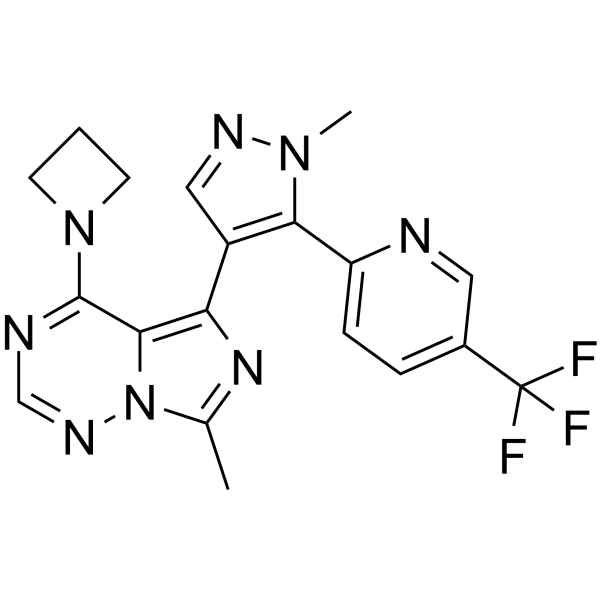 0 ImagesSynonyms: PF-999PF-05180999 (PF-999) is a phosphodiesterase 2A (PDE2A) inhibitor, with an IC50 of 1.6 nM.
-
VP3.15 dihydrobromide
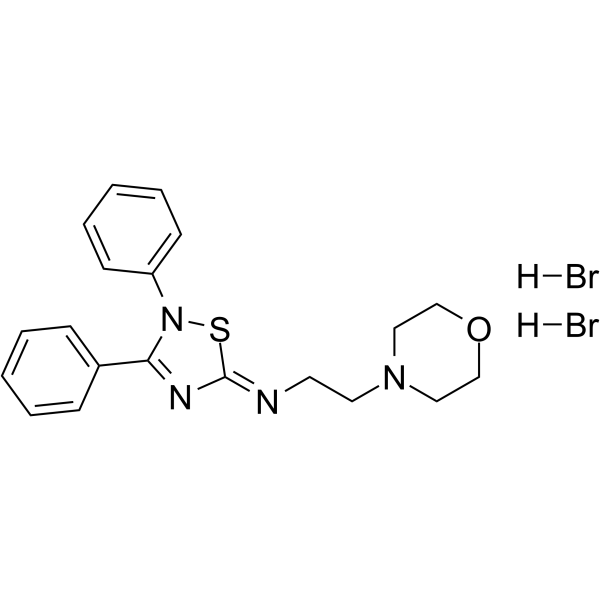 0 ImagesVP3.15 dihydrobromide is a highly potent, orally bioavailable, and CNS-penetrant PDE7-GSK3 dual inhibitor, with IC50 values of 1.59 μM and 0.88 μM against PDE7 and GSK3, respectively. VP3.15 dihydrobromide elevates intracellular cAMP levels, suppresses immune responses, enhances remyelination, limits excessive tau phosphorylation, and alleviates neuroinflammation and neuronal loss. VP3.15 dihydrobromide promotes oligodendrocyte precursor cell differentiation, improves in vivo remyelination, inhibits autoimmune encephalomyelitis, and mitigates germinal matrix-intraventricular hemorrhage-related brain injury, cerebral atrophy, ventricular enlargement, and cognitive impairment. VP3.15 dihydrobromide can be used in research related to multiple sclerosis and germinal matrix-intraventricular hemorrhage.
-
PDE7-IN-2
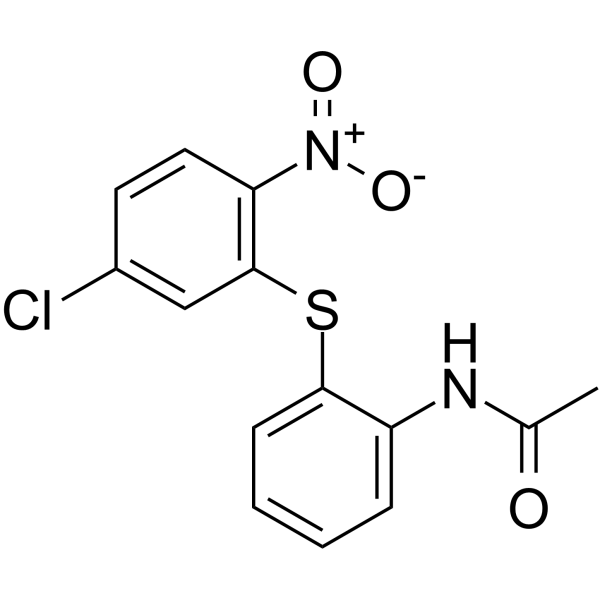 0 ImagesPDE7-IN-2 (compound 2) is a potent PDE7 (phosphodiesterase 7) inhibitor with IC50 value of 2.1 µM. PDE7-IN-2 has the potential for the research of parkinson’s disease.

-
PDE7-IN-3
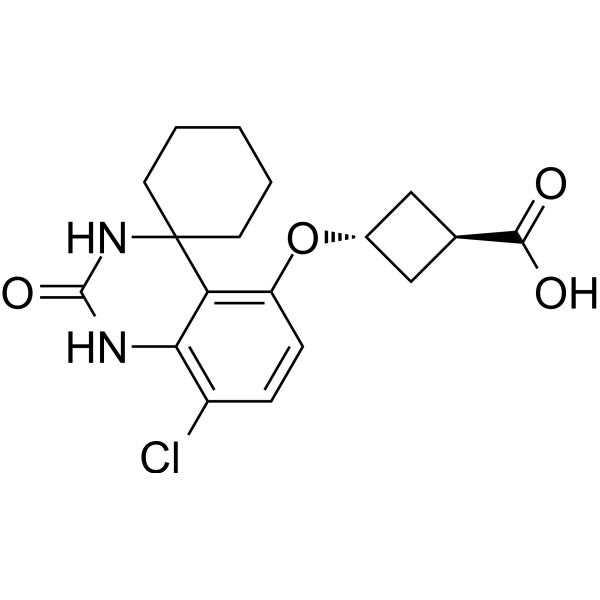 0 ImagesPde7-in-3 (example 2) is an inhibitor of the phosphodiesterase PDE7 with potential analgesic activity. PDE7-IN-3 can be used to study inflammatory, neuropathic, visceral and nociceptive pain.
-
PDE7A-IN-1
 0 ImagesPDE7A-IN-1 is an orally active and selective PDE7A inhibitor with an IC50 of 0.0037 μM against PDE7A. PDE7A-IN-1 shows excellent isozyme selectivity over PDE7B. PDE7A-IN-1 elevates intracellular cAMP levels, suppresses ECR5 enhancer activity and reduces sclerostin expression. PDE7A-IN-1 significantly increases bone mineral density in rats. PDE7A-IN-1 can be used for the study of osteoporosis.
-
PF-04822163
 0 ImagesCat. No.: HY-120741CAS No.: 1798334-07-2PF-04822163 is an orally active, selective, and blood-brain barrier permeable PDE1 inhibitor with IC50 values of 2 nM, 2.4 nM, and 7 nM for PDE1A, PDE1B, and PDE1C respectively. PF-04822163 can be used in the research of attention deficit hyperactivity disorder or Parkinson's disease.
-
Avanafil dibenzenesulfonate
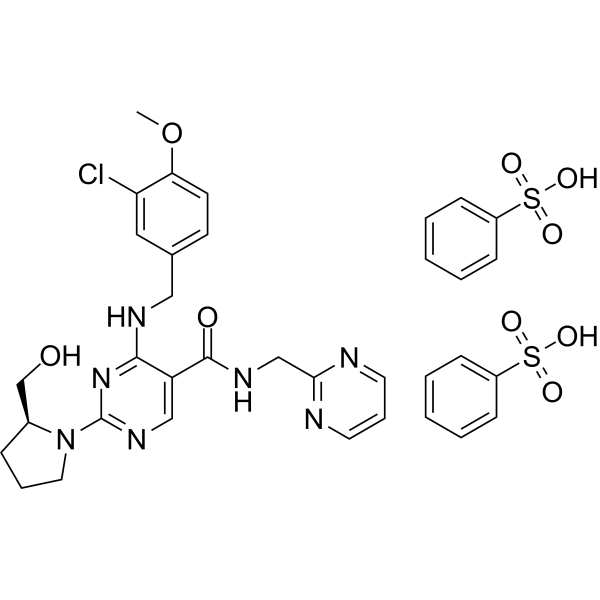 0 ImagesCat. No.: HY-18252ACAS No.: 330784-48-0Synonyms: TA1790 dibenzenesulfonateAvanafil (TA-1790) dibenzenesulfonate is a potent and selective phosphodiesterase-5 (PDE-5) inhibitor with IC50 values of 5.2 nM, 630 nM, 5700 nM, 6200 nM, 12000 nM, 27000 nM, 51000 nM and 53000 nM for PDE-5, PDE-6, PDE-4, PDE-10, PDE-8, PDE-7, PDE-2 and PDE-1, respectively. Avanafil dibenzenesulfonate activates NO/cGMP/PKG signaling-pathway to decrease loss in BMD, bone atrophy, and oxidative stress. Avanafil dibenzenesulfonate inhibits cyclic guanosine monophosphate (cGMP) hydrolysis and thus increases cGMP levels. Avanafil dibenzenesulfonate can be used for the research of erectile dysfunction and osteoporosis.
-
OPC 33540
 0 ImagesCat. No.: HY-112631CAS No.: 189362-27-4OPC-33540 is a highly selective and competitive PDE3 inhibitor with IC50 values of 0.32 nM (PDE3A) and 1.5 nM (PDE3B). OPC-33540 exhibits IC50s against PDE1, PDE2, PDE4, PDE5, and PDE7 of 42.9, 52.3, 100.8, 2.5, and 51.3 μM, respectively. OPC-33540 significantly enhances cAMP accumulation in platelets and effectively inhibits thrombin-induced platelet aggregation. OPC-33540 can be used in antithrombotic studies.
-
PDE5-IN-13
 0 ImagesCat. No.: HY-170435PDE5-IN-13 (Compound 14b) inhibits phosphodiesterase 5 (PDE5A) with an IC50 of 3 nM. PDE5-IN-13 is a potential candidate for PAH (pulmonary arterial hypertension) research. PDE5-IN-13 has high selectivity for targets over PDE1, PDE2, PDE3, PDE4, PDE7, PDE8, PDE9, PDE10, and PDE11. PDE5-IN-13 is orally active.
-
PDE4-IN-12
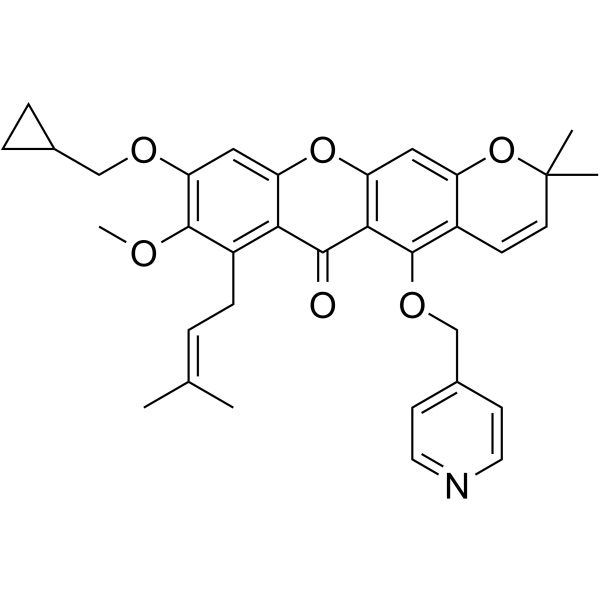 0 ImagesCat. No.: HY-151174CAS No.: 2901084-32-8
-
Multitarget AD-IN-6
 0 ImagesCat. No.: HY-181762Multitarget AD-IN-6 (Compound 39) is a multi-target inhibitor, with an IC50 of 15.54 μM against PDE4B, 15.15 μM against PDE7A, 8.39 μM against PDE3A, and a Kd of 37.7 μM against CHIT1. Multitarget AD-IN-6 acts as a TRPA1 antagonist, reduces the level of the NLRP3 inflammasome multiprotein complex to inhibit its activation, while inhibiting PDE4B, PDE7A and CHIT1, and decreasing the phosphorylation of NF-κB. Multitarget AD-IN-6 improves the pathology of elastase-induced emphysema in mice. Multitarget AD-IN-6 is applicable for the research of chronic obstructive pulmonary disease.
-
AN-2898
 0 ImagesCat. No.: HY-111167CAS No.: 906673-33-4AN-2898 is a selective PDE4 inhibitor with IC50 of 0.027 μM over other phosphodiesterase enzymes, such as PDE1A, PDE2A and PDE3A. AN-2898 also potently inhibits PDE4 subtypes (PDE4B1, PDE4A1A and PDE4D2). AN-2898 significantly inhibits the production of TNF-α, IL-2, IFN-γ, IL-5 and IL-10. AN-2898 can be used for mild to moderate atopic dermatitis (AD) and psoriasis research.
-
PDE/TRPA1/CHIT1-IN-1
 0 ImagesCat. No.: HY-179503PDE/TRPA1/CHIT1-IN-1 is a phosphodiesterases (PDEs), TRPA1, and hCHIT1 (KD of 37.7 μM) inhibitor. PDE/TRPA1/CHIT1-IN-1 is a broad-spectrum PDE inhibitor, potently targeting key isoforms including PDE4B, PDE7A, PDE3A, and PDE8A with IC50s of 15.54, 15.15, 8.39 and 16.46 μM. PDE/TRPA1/CHIT1-IN-1 suppresses NLRP3 inflammasome activation and inhibits NF-κB phosphorylation, downregulating the expression of pro-inflammatory genes (TNF-α and IL-6) in vivo. PDE/TRPA1/CHIT1-IN-1 can be used for chronic obstructive pulmonary disease (COPD) and related inflammatory lung disorders research.
-
BC8-15
 0 ImagesCat. No.: HY-134937CAS No.: 950385-77-0BC8-15 is a PDE inhibitor with IC50 values of 0.28, 0.22, and 6.46 µM for inhibiting PDE8A, PDE4A, and PDE7A, respectively. BC8-15 can enhance steroidogenesis in mouse Leydig cells.
-
LH17
 0 ImagesCat. No.: HY-180803LH17, a Kaempferol (HY-14590) derivative, is a potent and selective PDE4 inhibitor (PDE4D2 IC50 = 73 nM, PDE4B2 IC50 = 190 nM). LH17 exhibits remarkable selectivity (>136-fold) against other PDE isoforms (PDE1B/2A/3A/5A/8A/9A/10A) (IC50 > 10000 nM), with the exception of PDE7A1 (IC50 = 300 nM). LH17 distinctly interacts with PDE4 M-pocket. LH17 demonstrates remarkable anti-fibrotic efficacy in both in vitro and in vivo models. LH17 can be used for idiopathic pulmonary fibrosis (IPF) research.
-
PDE4D inhibitor 1
 0 ImagesCat. No.: HY-173290PDE4-IN-1 is a PDE4 inhibitor with high potency (IC50 : 8.6 nM) and selectivity over other PDE subtypes. PDE4-IN-1 inhibits the release of inflammatory cytokines and chemokines. PDE4-IN-1 greatly restores impaired cAMP-CREB signaling pathway. PDE4-IN-1 inhibits proliferation and promotes differentiation to reverse the formation of psoriasis.
-
PDE3/4-IN-4
 0 ImagesCat. No.: HY-181088CAS No.: 3088024-27-2PDE3/4-IN-4 is an orally active PDE3A and PDE4B inhibitor with IC50 values of 10 nM and 9.4 nM, respectively. PDE3/4-IN-4 shows selective activity relative to most other PDE family members. PDE3/4-IN-4 modulates the cAMP/PKA/CREB signaling pathway. PDE3/4-IN-4 inhibits pro-inflammatory factor IL-6. PDE3/4-IN-4 reduces expression of inflammatory markers in liver tissue. PDE3/4-IN-4 attenuates liver fibrosis. PDE3/4-IN-4 limits liver damage in cholestatic and sepsis-induced liver disease mice models. PDE3/4-IN-4 can be used for the research of liver injury, cholestatic liver diseases, sepsis-induced liver injury.
- 1
- 2



